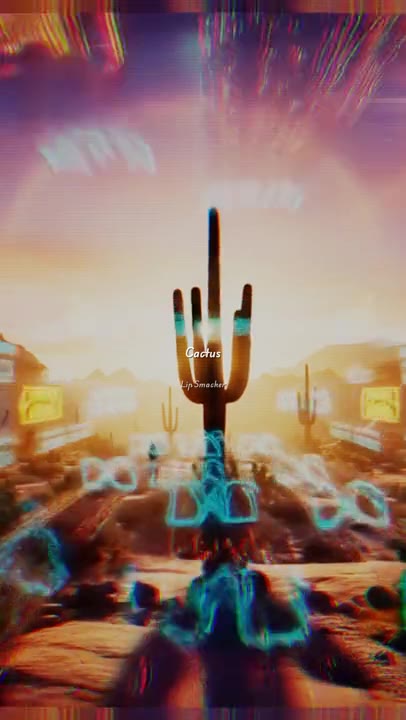
The first render I approved for BeatLinked made me wince. It went out anyway. Shipping beats polishing, and nobody learns anything from a clip that never left the folder.
A month later I put both versions side by side. The difference is not subtle, and I think it is worth showing, because it is the most honest answer to the question every musician asks us: what will my song actually look like?
August: where we started
This is one of our first clips. An early render of a track called Cactus.
And this is from the same era, a track called U Like.
They move with the music. That part worked from day one, and it is still the whole point. But the visuals were flatter, the endings were abrupt, and you had no say in the look until it was too late. Upload a song, wait, hope.
What changed
Three things, in the order we fixed them.
You approve the look first. Nothing renders until you have seen the keyframe and said yes to it. If you do not like where the video is headed, you change it before a single frame of the expensive part exists. This is the feature I am proudest of, because it turns a gamble into a decision.
The renders stopped looking digital. We passed the output through a film treatment. Grain, handheld drift, halation, the small imperfections that make footage feel shot instead of generated. Same energy, warmer skin.
Here is Cactus again, same track, current era.
The clips became postable. Title and artist on screen, your streaming links at the end, a caption and hashtags ready to copy. The difference between a cool visual and something you can drop on Reels tonight.
Then we fixed the cuts
The part I was not happy with: cuts that land on the beat, every time, down to the frame.
We ran the numbers on our own track. Even with our best beat detection, cuts wandered about a fifth of a beat off the grid on average, and the worst ones missed by nearly a full beat. The error compounded as the song goes on. Close enough to feel right in a club. Not close enough for me.
So we rebuilt how the edit walks the music. Every cut now lands on a real beat, measured against a proper beat grid for your track, and the worst miss is under twenty milliseconds. That is less than one video frame. When a cut lands exactly where the kick does, you feel it before you can explain it. Now it does.
See it on your track
The only way to judge renders is with your own song in them. Upload a track, approve a look, and watch what comes back.
Want to see your own track do this?
Make your music video